Pluckin' Petals, Clickin' Like
Download video: MP4 format | Ogg format |WebM format

who's the
likiest
of them all?

Friends, when you clickity-click "Like" on Facebook you're doin' a lot of things. You're showin' that you're fond of a picture of a dog skateboardin'. You're showin' you agree that skateboardin' dogs should wear helmets. You're even showin' you're happy about canine athletics and look forward to our postcanine/feline future (yeah, I mean that in a postmodern sense where the dog/human and even cat/dog binaries and essentialisms are deconstructed). You may even be communicatin' that the picture of that chick or the photo of that dude looks good! You can even re-contextulize media-like we do here with Ghostbusters!
What you aren't doin' and what pluckin' petals lets ya do that Facebook (Fb) doesn't allow ya is to pluckity-pluck or clickity click "Like me not"—to "Dislike." At least with flower pluckin', you can game the game. If you look for odd or even numbered petals you can "fix" it so you get the "Like Me" or "Like Me Not" outcome you want. You know what we mean: use trillium for “Like Me” and dogwood
 for “Like Me Not” or vice versa. You can even game the game by startin' with "Like Me Not" instead of "Like Me." With pluckin' petals you've got some agency. On Fb, though, you can't game the game so easily, Friends. You can't clickity-click to be unfond of that skateboardin' dog; you can't disagree about dogs wearin' helmets; you can't even be unhappy about a postcanine/feline future. And, for better or worse, you can't communicate that the picture of that chick or the photo of that dude don't look so good.
For us the lack of a "Dislike" button on Fb creates an important asymmetry in communication and promotes a particular Fb worldview. As you pluck our petals, you'll get to see the ways we, the authors, interpret the presence of "Like" and the absence of "Dislike" buttons. But, first, check out the theorists we "Like" and use a lot in Like Me, Like Me Not. And don't forget to watch that skateboardin' postcanine doggie.
Likin' McLuhan
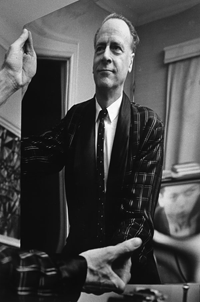
We "Like" Marshall McLuhan (2005) because he wrote, "the medium is the massage" (or message). And for McLuhan "all media are extensions of some human faculty—psychic or physical" (p. 26) whether it be speech, a tire, print, or even a "Like" button. Mark Federman (2004) puts it like this:
a medium - this extension of our body or senses or mind - is anything from which a change emerges. And since some sort of change emerges from everything we conceive or create, all of our inventions, innovations, ideas and ideals are McLuhan media.
And, by message, McLuhan meant for us to pay attention to the "unanticipated consequences" of media—the social and cultural effects of media (Federman, 2004). McLuhan wasn't so interested in the content delivered by a medium as he was interested in the effects or messages of the medium or media. As Chandler (2002) puts it, "the medium is not 'neutral.'" On Fb, you can "Like" a whole lot. You can "Like" pictures, comments, and wall posts. But you can't "Dislike" 'em. So for us the Fb "Like" button has important social implications about how we communicate.
So with Like Me, Like Me Not, we pull a McLuhan and examine some of the unintended messages sent by Fb's "Like" button. And we think we have an aphorism to help you remember our purpose. In our attempt to McLuhan, we say, "The Facebook is the likening." If you consider the hundreds of millions of users pushing the "Like" button and missing that obvious petal—"Dislike"—we can see how the "Like" button engenders a particularly positive worldview on communication.
Likin' Burke
The social implications of Fb's "Like" button are rhetorical too. Media blogger Paul Sawers (2010) explains the definition of rhetoric we feel is being promoted by Facebook. In his discussion of the problems a "Dislike" button might cause, he writes,
Social media is all about building networks, being accepted, being 'liked', sharing information…positive things. A dislike button goes against all of that and would only promote bad karma and negativity. Anti-social media, in other words.
And if you replace "Social Media" with rhetoric, you get Facebook's view of rhetoric:
Rhetoric is all about building networks, being accepted, being 'liked', sharing information…positive things. A dislike button goes against all of that and would only promote bad karma and negativity. Anti-rhetoric, in other words.
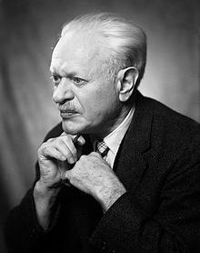
We like to think of rhetoric a little bit differently. Kenneth Burke (1969a) makes rhetoric a little less one-sided in a couple of the ways he defines rhetoric. He writes:
the basic function of rhetoric [is] the use of words by human agents to form attitudes or to induce actions in other human agents (p. 41).
And
It [rhetoric] is rooted in an essential function of language itself, a function that is wholly realistic and is continually born anew: the use of language as a symbolic means of inducing cooperation in beings that by nature respond to symbols (p. 43)
For Burke and what we call Fb's "rhetoric" and "anti-rhetoric," communication can't be so easily divided into a positive (rhetoric) and negative (anti-rhetoric) binary. Sure, it's about "cooperation" or, as Sawers explains, "building networks, being accepted, being 'liked', sharing information." But rhetoric includes "anti-rhetoric" (i.e. bad karma and negativity). After all, builiding a network can also mean coming together to "Dislike" something too; it can mean inducing and forming "bad" karma and "bad" attitudes and "bad" actions. For us, the exisitence of the "Like" button is more complicated than Sawers admits. And by looking at it rhetorically through Burke's lens we get a better idea of how the "Like" button works.
So when you pluck petals you'll find, our rhetorical interpretation of how Fb's "Like" button is a rhetorical move with important communicative and "anti-rhetorical" consequences.
LikeLessons
Once you've plucked a petal and liked our comments, you'll come to our Like(Life)Lessons. These lessons are short statements that summarize what we wantcha to take from each petal.
Like, have a good time plucking!